Lighting a Portrait So It Becomes a Striking Sketch
How the direction and softness of light affect a portrait, and simple lighting setups that convert into strong sketch results.
Light shapes a face. It also decides how well a portrait will turn into a sketch, since sketch effects rely on shadows and edges.
Why light matters
A sketch conveys form through tone and line. If a face is lit flatly from the front, there's little shadow to work with. If it's lit from the side, shadows model the nose, cheeks and jaw, giving the sketch depth.
Basic lighting directions
| Direction | Effect | Suitability for sketch |
|---|---|---|
| Front (flat) | even, few shadows | soft, but can look flat |
| Side (45 degrees) | shadows model the face | usually excellent |
| Full side (90 degrees) | half the face in shadow | dramatic |
| Back or rim light | glow around edges | moody, needs care |
| Top light | shadows under brows and nose | can look harsh |
A simple window setup
- Sit or stand near a window with soft daylight.
- Turn the face slightly toward the window, so that light comes from the side.
- Face the camera with a slight angle.
- Keep the background plain, and away from the window's brightest area.
- Take a few shots with slightly different angles.
Soft versus hard light
- Soft light (cloudy day, near a window) gives gentle shadow transitions, flattering for faces.
- Hard light (direct sun) creates sharp shadows and high contrast, which can look dramatic in sketch effects, but can also create harsh patches.
Avoid
- Overhead midday sun, which casts deep shadows in the eyes.
- Mixed light colours, such as a warm lamp plus cool daylight.
- Flash straight on, which flattens features.
The eyes
Try to keep light in the eyes. A small catchlight, a bright reflection in each eye, gives life to a portrait and translates well into drawings.
Angle and expression
- A slight head tilt adds interest.
- Eyes at or slightly above the camera feel engaging.
- A natural expression beats a stiff pose.
- Take many shots. People relax over time.
Background
Plain, uncluttered backgrounds help the effect focus on the face. A distant, softly blurred background works well.
Check before applying
Look at the photo. Can you see the shape of the face by its shadows? If so, it will probably make a good sketch.
Try it
Take three photos of the same person, lit from the front, the side and slightly from above. Apply the same effect to each and compare.
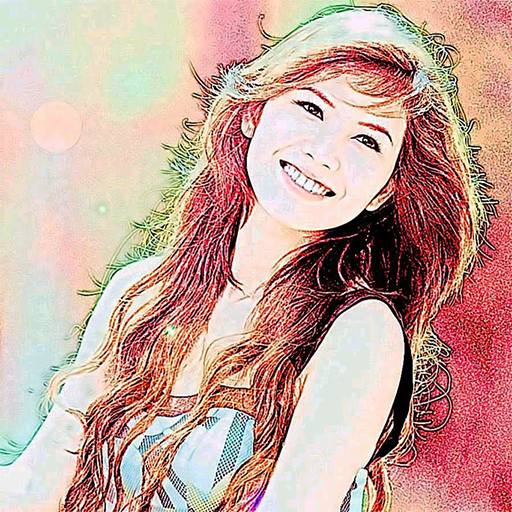
Color Photo Sketch
Turn your photos into sketch and art-style effects in one tap
More about Color Photo Sketch
Graphite, Charcoal and Ink: Three Drawing Media and Their Looks
How different traditional media create different moods, and how to choose a sketch style for your photo.
Read article →Hatching and Cross-Hatching: How Artists Build Shadow with Lines
The classic line-based shading techniques and how to recognise their look in sketch and engraving-style photo effects.
Read article →Line, Tone and Texture: The Three Building Blocks of Any Sketch
A beginner's guide to the elements that make a sketch look like a sketch, and how to spot them in a sketch-style photo.
Read article →Pencil Grades Explained: From HB to 8B and What They Look Like
How the pencil grading scale works, what each grade is good for, and why sketch effects often mimic these looks.
Read article →