Diagonals and Backwards Words: Finding the Hard Ones
Why diagonal and reversed words are the hardest to spot, and how to train your eyes to find them.
Most players find words that run left to right and top to bottom first. The hard ones are diagonals and words written backwards.
Why they are hard
We read left to right, and top to bottom. Our eyes are trained to follow those directions. Words in other directions don't "pop" the same way.
Backwards words
For a word that runs right to left or bottom to top, try this:
- Read the grid backwards in your head.
- Look for the last letter of the word instead of the first.
- Tilt your head or the phone if it helps, to see it from a new angle.
For SUNSET, look for T, then check whether E, S, N, U, S follow in a line.
Diagonals
Diagonal words run corner to corner. To find them:
- Look for the first letter.
- Check up-left, up-right, down-left and down-right from it.
- Follow the line by eye or with a finger.
Using a finger or pencil
On a printed grid, a ruler or pencil laid along a diagonal makes it easier to read. On a phone, slide your finger lightly along the possible line.
Train your eyes
- Spend a few minutes hunting only diagonals.
- Then hunt only backwards words.
- Over time, these directions feel less strange.
Look for patterns
If the grid has several diagonal words, they often cross other words. Finding one can reveal where another is.
Don't skip the hard ones
Leaving the last few words for later is fine. With fewer words left, there are fewer places to check.
Tips
- Search for the last letter of backwards words.
- Check all four diagonals.
- Train each direction.
Relax with an endless word search in Crossword - Word Search Game →
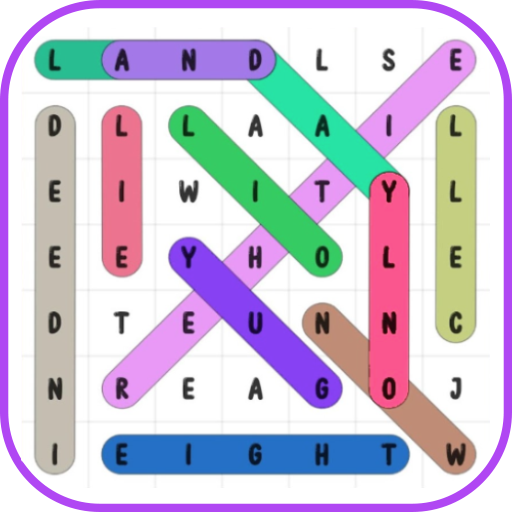
Crossword - Word Search Game
A relaxing, endless word search puzzle game
More about Crossword - Word Search Game
Balancing Screen Time and Puzzle Games for Children
Practical guidance for parents on setting limits and choosing calm, educational games.
Read article →Calming Waiting-Room Nerves With a Simple Puzzle
How a light puzzle can occupy your mind in a waiting room, and how to use it kindly alongside other coping tools.
Read article →Gentle Mental Activity for Older Adults
How simple puzzles can be an enjoyable part of daily life for older people, with practical tips for comfort.
Read article →Setting Small Goals in Puzzle Games
How tiny, realistic goals can make puzzle time more satisfying without turning play into pressure.
Read article →